Get MiniOne Updates
Sign up for our email communications to get the latest updates from MiniOne Systems.
Your privacy is important and your information will never be shared.

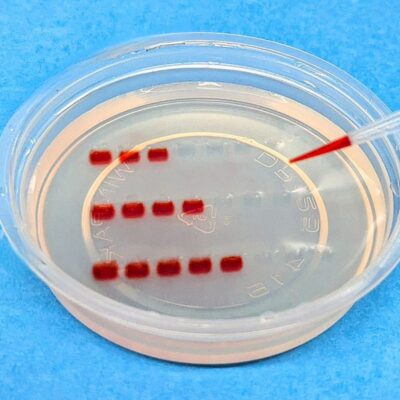
Through introductory labs and crime-scene–style scenarios, students apply electrophoresis to compare DNA samples, analyze banding patterns, and draw evidence-based conclusions. Along the way, they reinforce essential concepts such as DNA structure and function, molecular variation, inheritance, and the relationship between genotype and phenotype. They’ll practice foundational scientific skills: experimental design, data analysis, critical thinking, and scientific argumentation (alongside pipetting and gel loading!)
These labs are ideal for forensic science courses, but they also integrate seamlessly into biology, life science, and biotechnology curricula. Electrophoresis becomes more than a one-off genetics activity—it serves as a transferable tool that supports instruction in molecular biology, evolution, enzymes, and biotechnology. Because the same equipment and core techniques can be reused across multiple units, these labs maximize instructional value while respecting real classroom budgets.
Showing all 7 results