Description
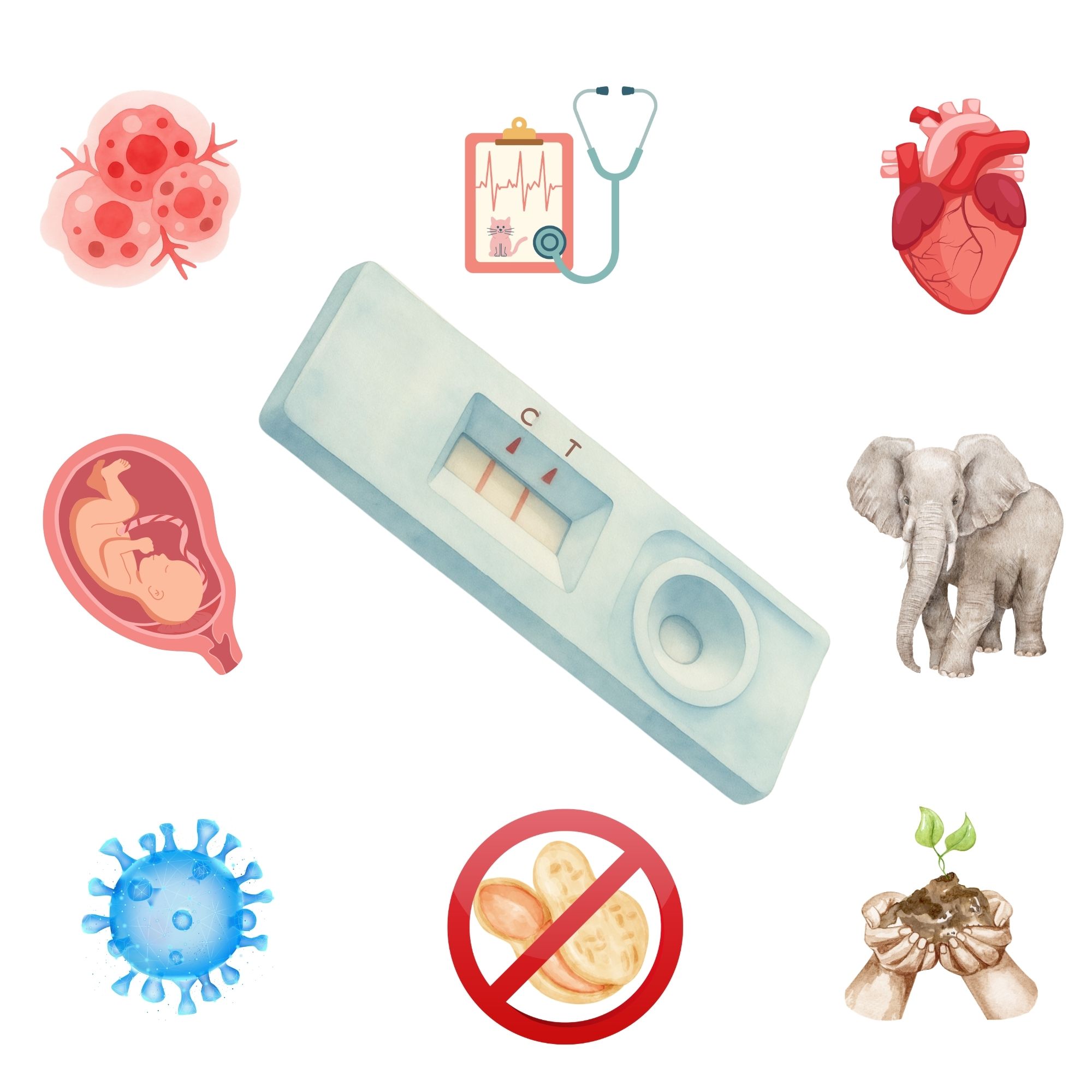
Rapid diagnostic tests have transformed the way clinicians, public health professionals, scientists and even households can test for a health condition of interest.
For a patient and clinician, a rapid test provides a quick initial assessment for early detection of a disease. Unlike traditional laboratory methods that can take days to return results, rapid tests deliver actionable information within minutes, often done in a doctor’s office (point of care) for detecting influenza, HIV, or strep throat, while COVID-19 and pregnancy are common rapid tests that can be done at home. These compact, easy-to-use tools have made fast diagnosis possible without the need for expensive test equipment.
The lateral flow assay is a type of rapid test that relies on immunoassay technology, where antibodies are engineered to bind to specific target molecules when a viral protein or bacterial antigen is present in a patient sample. When the target is present, the biomarker is sandwiched between a test antibody and gold-conjugated antibody, producing a positive result. Lateral flow assays require no special equipment or training, making them usable in non-medical environments, including your own home. During the COVID-19 pandemic, they became a critical tool for mass screening, enabling communities to identify and isolate cases quickly and slow transmission.
In this MiniLab, students become clinicians, screening breast cancer patients for metastasis using a lateral flow assay to look for the CA 27.29 biomarker. In order to understand how the test works, students will first learn about antibody structure and diversity, use a model to simulate biomarkers flowing through a lateral flow system, then run the patient samples to determine the status of metastasis. This MiniLab can be used as a follow up of the Personalized Medicine: Diagnosing and Targeting HER2 and ER+ Breast Cancer MiniLab (M3023).
Lateral flow for environmental conditions:
Lateral flow can also be used to monitor environmental conditions. The basics of the immunoassay remain the same, the only difference is the scenario and biomarker. We provide GMO and Environmental Toxin Detection scenarios as an alternative narrative to use with this MiniLab.
Materials Include:
- Antibody model making kit enough for 30 students, includes pipecleaners and beads.
- Lateral Flow paper model with pop out components, enough for 11 sets
Wet lab reagents, enough for 10 student groups, including:
- Lateral Flow rapid test strips
- Positive sample for controls and patient samples
- Negative sample for controls and patient samples
- 1 bag of 2.0 mL Microcentrifuge tubes
Additional Materials required:
MiniOne 100-1000 μL Adjustable Volume Micropipette (M2011), plus tips
Recommended but not required:
ONEStep Pro 5 Function Variable Volume Electronic Pipette, 0.25 – 5 mL (EA3006), plus tips